How to Start Writing a Report When You're Stuck on a Blank Page

You have a report due. You open a new document. The cursor blinks. You write a sentence, delete it, write another, delete that too. An hour passes and the page is still empty.
This is not a writing problem. Knowing how to start writing a report has almost nothing to do with finding the right words. The real obstacle is that you haven't made a few small decisions yet — decisions about who will read this, what they need to do with it, and what the report should say before it says anything else. Once those are settled, the writing part is surprisingly mechanical.
Here is a method that works. It has no poetry in it. That's the point.
Decide who reads it and what they will do with it

Before you type a word, write down two things: the name (or role) of the person who will read this report, and the single decision or action they need to take after reading it.
"Marketing director — decide whether to approve the Q3 budget reallocation." That's it. One reader, one decision. If the report serves multiple readers, pick the most important one. You can adjust for the others later.
This sentence becomes your compass. Every paragraph you write from here should either support that decision or get cut. Most blank-page paralysis comes from not knowing what to include. When you know the decision, inclusion becomes obvious.
Write the conclusion before anything else
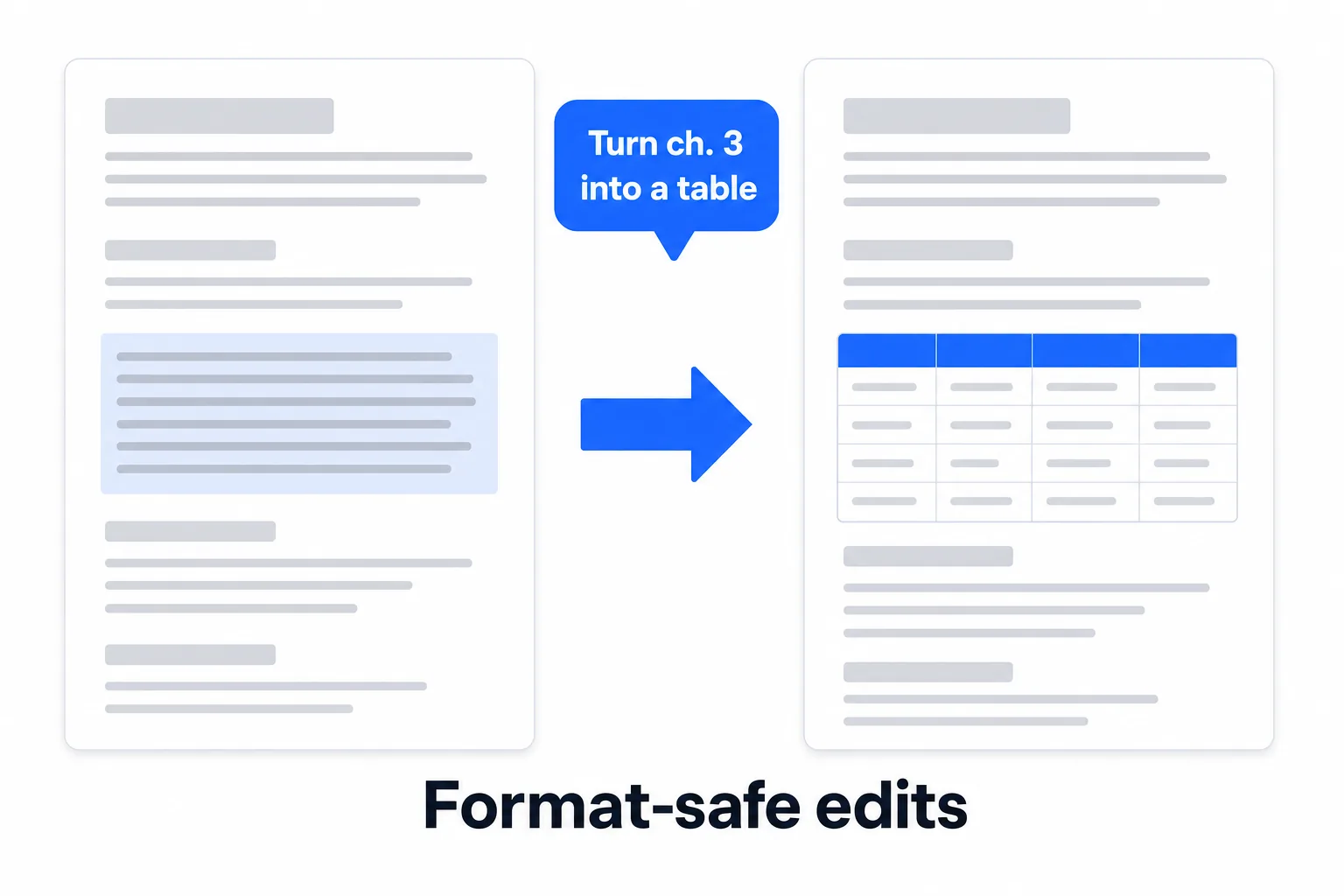
Reports are not mystery novels. The reader should never have to dig for your point. Write your recommendation, finding, or summary first — literally type it at the top of the document.
"We should move 15% of the paid-search budget to organic content. Here's why." That sentence may change later, but having it on the page does something important: it kills the blank page. You now have a document with a direction. Everything after this is just evidence.
This is sometimes called the inverted pyramid — conclusion first, supporting details after, background last. Newsrooms have used it for over a century. It works for business reports for the same reason: busy people read the top and skim the rest.
Gather your raw material before you organize it
Do not outline first. Outline second.
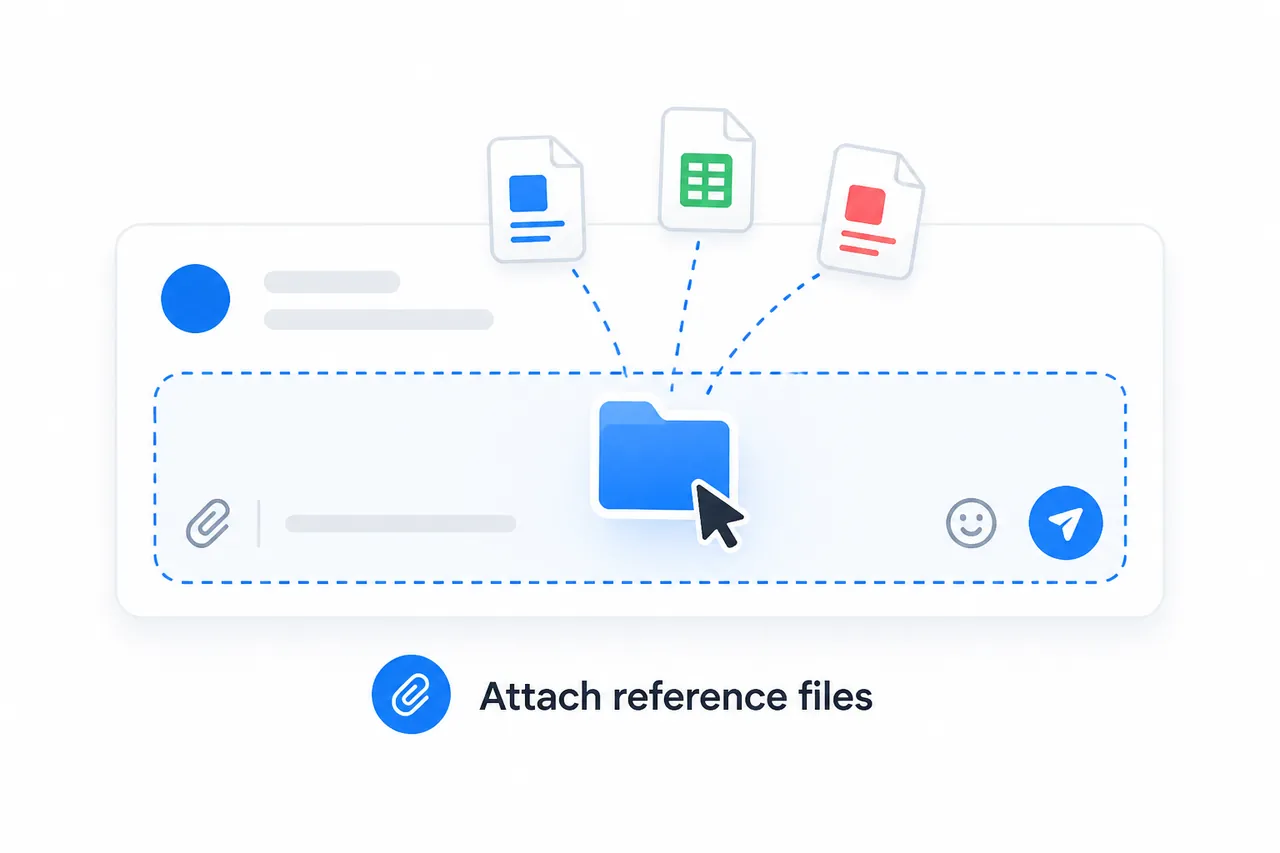
First, pull every piece of raw material into one place. Meeting notes, email threads, spreadsheet tabs, chat messages, earlier drafts, bullet points you scribbled on a napkin. Dump all of it into a single document or folder. Don't judge it. Don't arrange it. Just collect.
Now read through the pile. You'll notice that the material naturally clusters into three or four topics. Those clusters are your sections. Drag them into a logical order — usually the order that best supports the conclusion you already wrote — and you have an outline. It took ten minutes, and it's grounded in real data instead of abstract guesses about what the report "should" cover.
This approach solves another common problem: realizing too late that you're missing a key number or approval. When all the material is in front of you, the gaps are visible early enough to fill them.
Write a bad first draft on purpose

Perfectionism is the engine of the blank page. You stare at the first sentence because you want it to be right. But first sentences are almost always rewritten anyway, so getting them right on the first pass is wasted effort.
Give yourself permission to write badly. Incomplete sentences are fine. Repeated words are fine. Brackets that say "[find the exact figure]" are fine. The goal of a first draft is to exist, not to impress.
Set a timer if it helps. Thirty minutes, no stopping, no editing. You'll be surprised how much usable material comes out when you stop filtering every thought before it reaches the page.
Once the draft exists, editing is a different — and much easier — kind of work. You can tighten a rambling paragraph. You can't tighten a paragraph that was never written.
End with the action you want
The last paragraph of your report should make the reader's next step obvious. Restate the decision or action from your opening compass, now backed by everything the report just laid out.
"To proceed, we need budget approval by October 4." Short, concrete, unmistakable. If the reader remembers nothing else, they remember what to do.
This also gives you a clean test for the whole report: read the first paragraph and the last paragraph back to back. If they tell a coherent story, the report works. If they don't, something in the middle wandered off track.
If the gathering-and-structuring phase is where you lose the most time, tools that handle it for you can help. HanFlow AI lets you attach reference files — drop in a folder of notes, data, or prior documents — describe what you need in one sentence, and get a structured draft back. It outputs Word, Excel, PowerPoint, or PDF, so the result is ready to share without reformatting. It runs in the browser with nothing to install.
But the method matters more than the tool. Even with a pen and a legal pad, the sequence is the same: know your reader, state your conclusion, collect your evidence, draft fast, and end with the ask.
Frequently asked questions
Q: How long should a business report be? As long as the decision requires and not a sentence more. A budget approval might need two pages. A market-entry analysis might need twenty. Let the reader's decision — not a template — set the length.
Q: Should I write the introduction first or last? Last. The introduction summarizes the report, so it's easier to write once you know what the report actually says. Write your conclusion first, your body sections next, and your introduction at the end.
Q: What if I have too much data and don't know what to include? Go back to your compass: one reader, one decision. Include only the data that helps that reader make that decision. Move everything else to an appendix or cut it. More data does not make a stronger report — relevant data does.
Q: I keep rewriting the same paragraph. How do I stop? Set a rule: no editing until the full draft is done. Rewriting mid-draft is a form of procrastination disguised as quality control. Write the whole thing badly first, then edit in a separate pass.
Q: What's the best structure for a report? For most business reports, the inverted pyramid works: recommendation first, key evidence next, supporting detail and methodology last. Readers who need only the conclusion get it immediately. Readers who need the detail can keep going.